
Direct-to-Card vs Retransfer Printing: Which Is Right for You?
A clear guide to direct-to-card and retransfer ID card printing, how each works and which method suits your organisation.
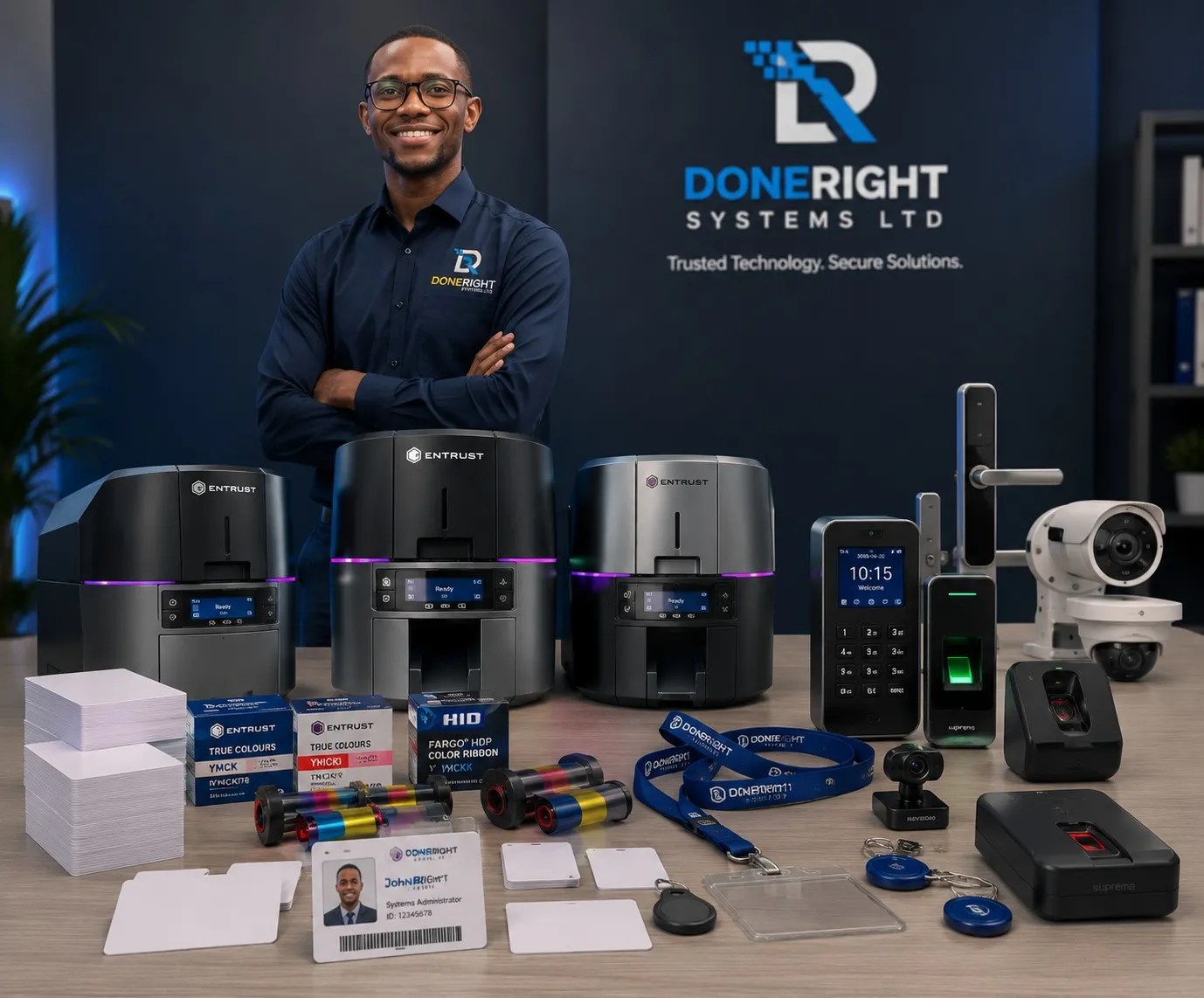
Choosing an ID card printer often comes down to one deceptively simple question: direct to card vs retransfer. Both technologies print professional identification cards, but they use different processes, produce different results and suit different budgets and applications. If your organisation in Zambia is buying its first printer, replacing an ageing unit or scaling up card issuance, understanding the difference will help you spend wisely. This guide from Doneright Systems explains how each method works, where each one shines and which is likely to be right for you.
How Direct-to-Card (DTC) Printing Works
Direct-to-card printing, often shortened to DTC, is the most common and most affordable ID card technology. As the name suggests, the printer applies the image directly onto the surface of the card.
The process works like this:
- A thermal printhead heats a printing ribbon that carries the colour panels (typically yellow, magenta, cyan and a black resin panel, known as YMCKO).
- As the card passes under the printhead, the heat transfers dye from the ribbon straight onto the plain card surface.
- An optional overlay panel adds a thin protective coat to help resist wear and fading.
Because the printhead touches the card directly through the ribbon, DTC is fast, simple and cost-effective per card. It is the workhorse of everyday card issuance and handles the majority of staff badges, membership cards and student IDs without difficulty.
How Retransfer (Reverse Transfer) Printing Works
Retransfer printing, also called reverse transfer, takes an extra step to achieve a higher-quality finish. Instead of printing straight onto the card, the printer first prints the image, in reverse, onto a clear transfer film. That film is then bonded onto the card surface using heat and pressure.
In short:
- The printhead prints the full image onto the underside of a clear retransfer film.
- A heated roller then laminates that film onto the card, transferring the image and sealing it under a durable clear layer.
Because the printhead never touches the card itself, only the film, the process protects the printhead and delivers a smoother, more consistent result. This indirect method gives retransfer its two signature advantages: true edge-to-edge coverage and excellent printing on difficult card surfaces. Retransfer printers usually cost more to buy and run, but for demanding applications the quality gap is significant.
Edge-to-Edge Printing and Card Surface Quality
One of the clearest differences in the direct to card vs retransfer comparison is how each method handles the edges of the card.
- Direct-to-card printers leave a very thin unprinted border around the card. This is because the printhead cannot safely print right to the very edge without risking damage, so a small white margin usually remains. For most staff and membership cards this is barely noticeable and perfectly acceptable.
- Retransfer printers print onto the film first, so the image can extend fully to the card edges. The result is genuine edge-to-edge (sometimes called "over-the-edge") printing with no white border, giving a premium, fully finished appearance.
The bonded film layer on a retransfer card also creates a smooth, glossy, professional surface. If your cards carry heavy graphics, full-bleed photographs or a strong brand design that must look flawless, retransfer produces a noticeably richer finish.
Printing on Uneven and Technology Cards (Smart, Contactless)
Modern ID cards are rarely just plain plastic. Many now contain embedded electronics: contact smart chips, contactless RFID antennas, or hybrid combinations used for access control, payment and secure identity. These components can create tiny bumps and uneven areas on the card surface.
This is where the two technologies diverge sharply:
- Direct-to-card printing works best on smooth, flat cards. On uneven surfaces, the printhead can struggle to make even contact, which may cause small gaps, faint patches or inconsistent colour around a chip or antenna.
- Retransfer printing handles these surfaces far better. Because the image is carried on a flexible film pressed onto the card, it conforms to minor bumps and irregularities, producing clean results even over embedded chips.
For organisations issuing smart or contactless cards, banks, universities, mines and government departments among them, retransfer is often the safer choice for consistent quality.
Durability and Image Quality Differences
Both methods can produce attractive cards, but they differ in resolution, colour depth and how well the finished card survives daily use.
- Image quality: Retransfer generally delivers sharper detail, smoother colour gradients and higher perceived resolution because the image is sealed under film. DTC quality is very good for standard use, and adding printer-side lamination can narrow the gap.
- Durability: The bonded film on a retransfer card protects the print from scratches, fading and general wear, which extends card life. DTC cards are more exposed, though an overlay panel or optional laminate improves their resistance considerably.
If your cards must survive years of daily swiping, tap-in access and handling, particularly in tough environments like mines or busy campuses, the extra protection of retransfer or laminated DTC pays off.
A quick comparison
| Factor | Direct-to-Card (DTC) | Retransfer |
|---|---|---|
| Print method | Directly onto card | Onto film, then bonded to card |
| Edge-to-edge printing | Small unprinted border | Full edge-to-edge |
| Uneven / smart cards | Best on flat cards | Excellent on chip / contactless cards |
| Image quality | Very good | Superior, photo-grade |
| Durability | Good (better with laminate) | Very good, sealed under film |
| Speed | Faster | Slightly slower |
| Cost per card | Lower | Higher |
Speed and Cost Differences
Budget and throughput matter, especially when you are printing at volume.
- Speed: DTC is faster because it prints in a single direct pass. Retransfer adds the film-bonding stage, so each card takes a little longer. For most offices the difference is minor, but for very high-volume issuance it can add up.
- Purchase cost: DTC printers are more affordable to buy, making them the natural entry point for smaller organisations and schools.
- Running cost: DTC consumables are generally cheaper per card. Retransfer uses both a ribbon and a transfer film, which increases the cost per card.
None of this makes one method "better" outright. It is about matching the technology to your needs and buying genuine consumables so your printer performs as intended. Doneright keeps genuine ribbons, films and cards in Lusaka stock to keep your issuance running.
Typical Use Cases for Each
Here is a practical guide to which method usually fits which situation.
Direct-to-card is often the right choice for:
- Staff and visitor badges
- School and college student IDs
- Membership and loyalty cards
- Everyday cards printed on flat, standard PVC
- Organisations that need affordable, reliable, everyday issuance
Retransfer is often the right choice for:
- Smart cards and contactless / RFID cards with embedded chips
- High-security government and national identity programmes
- Bank and financial cards that must look premium
- University and enterprise credentials with full-bleed, photo-quality designs
- Any card where edge-to-edge print and maximum durability matter
Many organisations run both: DTC for high-volume everyday badges and a retransfer unit for premium or technology cards.
Examples From Brands Doneright Supplies
Doneright Systems supplies and supports leading ID card printer brands, including Entrust, Zebra and Evolis, so we can match you to the right technology rather than a one-size-fits-all box.
- Entrust Sigma (DTC): The Entrust Sigma range is a strong example of modern direct-to-card printing, well suited to everyday staff, student and membership card issuance where reliability and value matter.
- Entrust Artista and retransfer models: For edge-to-edge, photo-quality and smart-card work, Entrust also offers retransfer-capable options, and retransfer models are available across the brands we carry for demanding, high-security and technology-card applications.
Whichever direction you lean, the printer is only part of the picture. Doneright sells, installs, trains your team on and supports these printers, and issues genuine consumables from Lusaka stock, so your investment keeps performing long after purchase.
Conclusion: Which Is Right for You?
The direct to card vs retransfer decision comes down to what your cards need to do. If you want affordable, fast, reliable issuance of standard badges and IDs, DTC is usually the smart, cost-effective choice. If you need edge-to-edge printing, photo-grade quality, or dependable results on smart and contactless cards, retransfer is worth the extra investment. Many Zambian organisations, from schools and NGOs to banks, mines and government, benefit from a blend of both.
Not sure which fits your budget and volume? The Doneright team can assess your needs and recommend the right printer, ribbons and cards, then install, train and support it locally. Request a quote or ask our specialists for advice today.
Planning an ID card or security rollout?
Tell us what you are issuing, securing or tracking. A specialist responds within one business day.
- Genuine stock
- Zambia-wide delivery
- Local support
Why the HDP6600 is The Best 600 DPI Re-Transfer ID Card Printer
This article highlights the HDP6600 as the top re-transfer printer for efficient Zambia-based business operations with strong security and reliability features.

How to Choose the Right ID Card Printer for Your Organisation
A practical buyer's guide to choosing the right ID card printer for your Zambian organisation, from print volume and card technology to running costs.
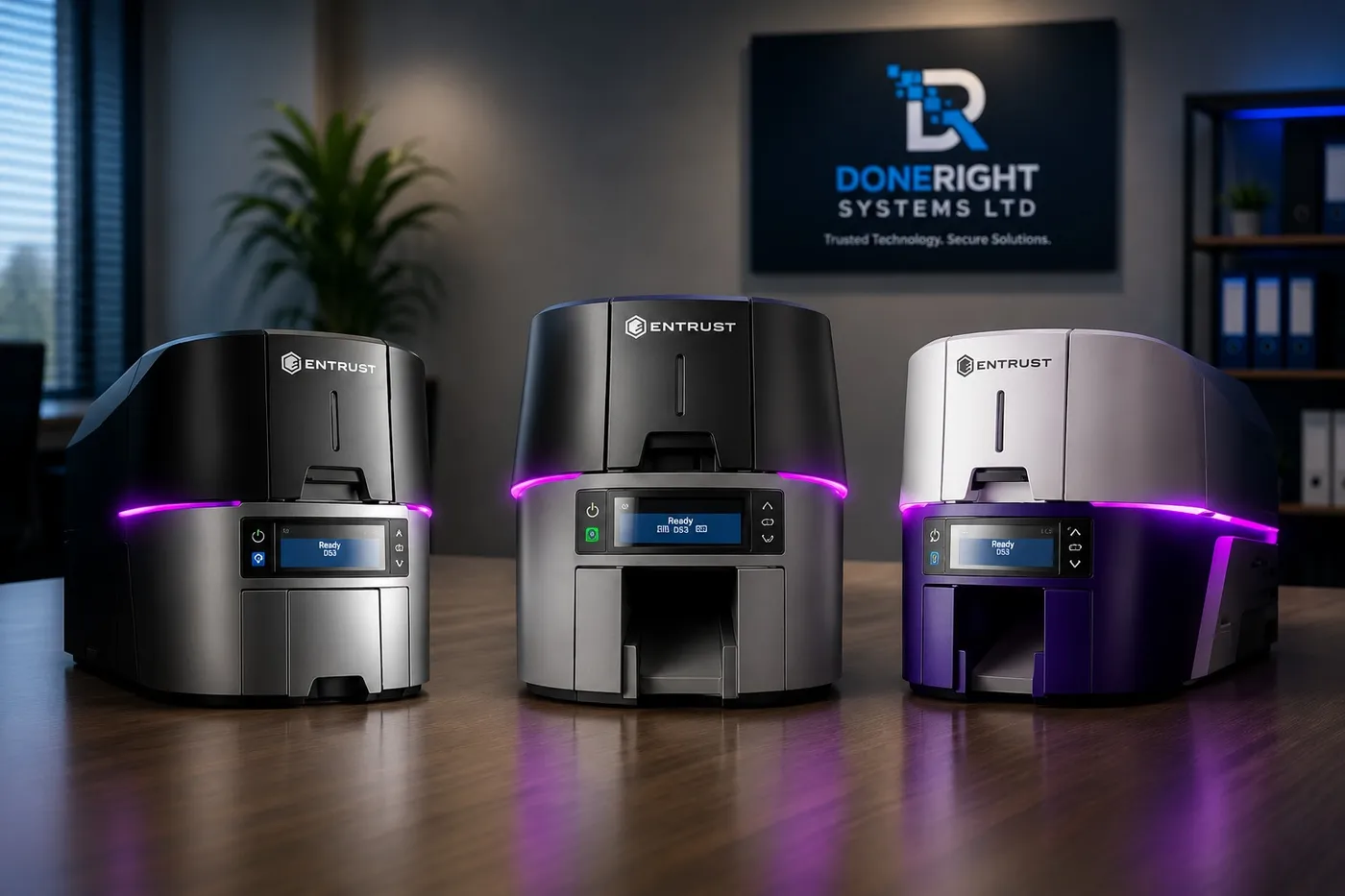
Entrust Sigma DS1, DS2 and DS3: Which Printer Should You Choose?
A practical guide to the Entrust Sigma DS1, DS2 and DS3 direct-to-card printers, helping Zambian buyers match the right model to their needs.