Secure ID Card Printing: The Security Features That Matter
The physical, printed and electronic security features that make ID cards hard to forge or clone, and how to lock down issuance in Zambia.
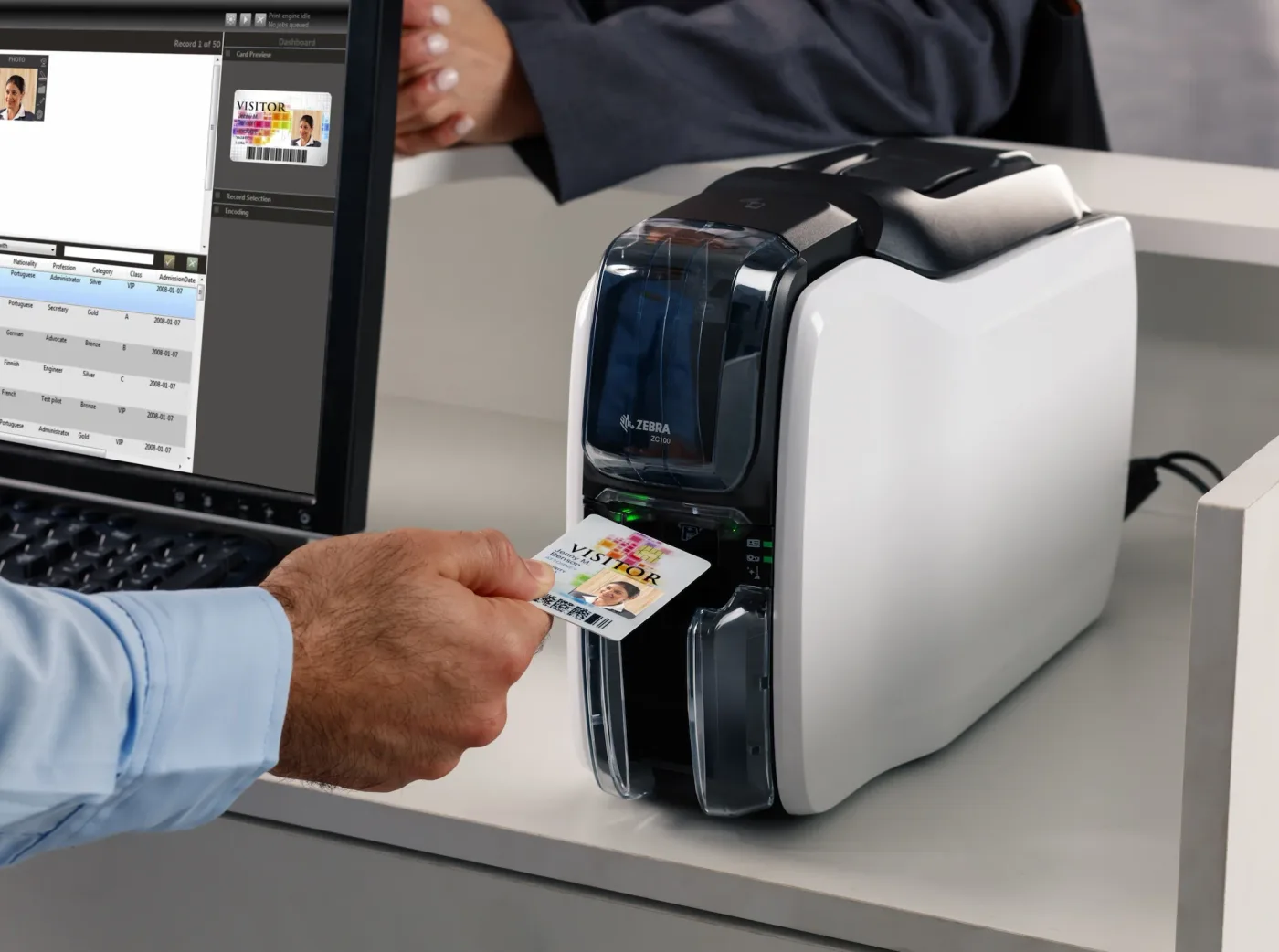
An ID card is only as valuable as it is hard to fake. If a forger can reprint your staff badge, clone a contactless card or peel a photo off a laminated pass, the card stops proving identity and starts undermining it. Secure ID card printing is the practice of layering physical, printed and electronic defences so that a genuine card is easy to verify and a counterfeit is expensive, slow and risky to attempt. This guide walks through the security features that matter, from holograms and UV inks to chip encoding and locked-down issuance, so that businesses, schools, NGOs, banks, mines and government bodies in Zambia can specify cards that stand up to real scrutiny.
Why card security matters for access control and identity
A printed ID card does two jobs at once. It lets a person confirm who someone is by sight, and it lets a system decide what that person is allowed to do. When either job can be spoofed, the consequences are practical and costly.
- Unauthorised access. A cloned card can open doors, unlock gates, clock in for someone else or authorise a transaction.
- Identity fraud. A convincing fake badge lets an outsider pose as staff, a contractor or an official.
- Reputational and compliance damage. Banks, mines and government issuers are judged on how well they control credentials, and a visible forgery undermines trust quickly.
The goal is not a single unbreakable feature. It is defence in depth: several independent layers, so that defeating one still leaves an attacker facing the others. Combine features that are hard to reproduce with features that are hard to alter, and make at least one of them verifiable in seconds by an ordinary person at a door or counter.
Visual security: holograms, UV printing, microtext and guilloche
Visual security features are the ones a person can check without special equipment, or with only a cheap UV torch. They are the first line of defence because they let a guard or teller reject an obvious fake on sight.
- Holograms and OVDs. Optically variable devices shift colour or image as the card is tilted. They are hard to photocopy or scan because a flat copy cannot reproduce the movement, and are typically applied through a holographic overlay or a custom-registered design.
- UV and fluorescent printing. Some printers lay down an invisible layer that only shows under ultraviolet light. A hidden logo that appears under a UV torch is a fast, low-cost authenticity check a simple reprint will not carry.
- Microtext. Text printed so small it looks like a solid rule to the naked eye. Under a loupe it resolves into readable words, and it blurs or breaks up when someone scans and reprints the card.
- Guilloche patterns. Fine, interwoven line patterns, similar to those on banknotes, that are hard to redraw accurately and reveal distortion when copied.
Professional printers in the Entrust and Zebra ranges support these features to varying degrees. Rather than quoting exact capabilities here, confirm which features a specific model and consumable set can produce, because this varies by printer and by the ribbon or film in use.
Lamination and holographic overlays for tamper resistance
Where visual features make a card hard to fake, lamination and overlays make it hard to alter. Both add a protective layer over the printed surface, but they differ in strength and purpose.
| Layer | What it does | Best suited to |
|---|---|---|
| Standard overlay (thin film) | Basic scratch and fade protection | General staff and membership cards |
| Holographic overlay | Adds a shifting security image plus protection | Cards needing a visible security mark |
| Laminate patch (thicker) | Strong tamper resistance, bonds to the card | High-security and long-life cards |
The security value of lamination is that it bonds tightly to the card. Trying to lift the laminate to swap a photo or change a name tends to destroy the surface underneath, leaving obvious evidence of tampering. A holographic laminate goes further by carrying its own optically variable image, so an altered card fails two checks at once. Laminate also extends card life, which matters for cards carried daily on a lanyard in dusty or industrial settings such as mines and depots.
Encoding: contactless, smart chip and magstripe as a security layer
Encoding turns a printed card into a machine-readable credential. Done well, it is one of the strongest layers, because the data can be protected in ways the printed surface cannot.
- Contactless smart cards. Cards that communicate by radio over a very short range. Modern contactless technologies support encryption and mutual authentication, so a reader and card prove themselves to each other before any data is exchanged. This makes casual cloning far harder than with older technologies.
- Contact smart chips. The visible gold-pad chips found on bank cards. They can store credentials and run cryptographic operations on the card itself, which is why they are common in banking and high-assurance identity schemes.
- Magnetic stripe. The oldest method. It is cheap and widely compatible but offers little protection on its own, because the data is easy to read and copy. Treat magstripe as a convenience feature, not a security control, and never let it be the only thing between a card and a door.
A point often missed: not all contactless cards are equal. Some legacy card types transmit a fixed number that can be copied with inexpensive equipment. If access control is the goal, specify encrypted, mutually authenticated card technology, and make sure your readers and software use those protections rather than falling back to the card serial number.
Locking down issuance: printer access and consumable control
The most sophisticated card is worthless if anyone can walk up to the printer and produce a genuine-looking badge. Security must extend to how cards are issued, not just how they are made.
- Restrict who can print. Keep the printer and its software under access control, with named operators and a clear approval step before a card is issued.
- Control the consumables. Ribbons, laminate film and blank cards are the raw material of a forged badge. Store them securely, count them, and reconcile stock against cards issued. Genuine, traceable consumables also protect print quality and the security features themselves.
- Use printer security options. Many professional printers support password protection, locking mechanisms and secure erase of print data. Some, including models in the Entrust Sigma and Artista lines, are designed with issuance security in mind.
- Handle rejects properly. Misprinted and expired cards should be destroyed and logged, not thrown in a bin where they can be recovered and reused.
A simple issuance principle
Treat blank stock and consumables the way a bank treats cheque paper. If you cannot say how many blank cards and how much ribbon you hold right now, your issuance process is a weak point regardless of how secure the finished card looks.
Card design best practice
Good design multiplies the value of every other feature. A cluttered or inconsistent card is easy to fake because no one is sure what a genuine one should look like.
- Design for verification. Put a clear photo, name and role where a person can read them in a second, and place the strongest security feature where a checker will naturally look.
- Keep the layout consistent. A single, well-known template makes odd cards stand out. Frequent redesigns train people to accept anything.
- Use high-quality photos. A sharp, correctly lit photograph is itself a security feature, because low-quality images are easy to substitute.
- Add expiry and versioning. Print an expiry date and design version so old cards can be retired and spotted after a refresh.
- Match the feature set to the risk. A visitor pass does not need the defences of a bank card. Spend your budget where the consequences of a fake are highest.
Compliance and audit considerations
For regulated issuers, and any organisation that takes governance seriously, security features must be backed by records. An auditor will ask not only what the card looks like but how you can prove a given card is legitimate.
- Keep an issuance log. Record who was issued which card, when, by whom and against what identity check.
- Protect cardholder data. Photographs and personal details captured for cards are personal data. Store them securely and limit who can access the issuance database.
- Manage the card lifecycle. Have a defined process for renewals, lost-card replacements and prompt revocation when someone leaves, so a valid-looking card is not still active after it should have been cancelled.
- Document the security features. Keep a controlled description of what a genuine card should contain, so staff and auditors have a reference to check against.
- Review periodically. Threats and technology change. Revisit your card specification and issuance controls on a regular schedule, not only after an incident.
How Doneright helps you design and issue secure cards
Secure ID card printing is a system, not a single purchase. It combines the right printer, the right card technology, genuine consumables and disciplined issuance, and each choice affects the others. Getting that balance right is where local expertise pays off.
Doneright Systems Limited is a Lusaka-based supplier that sells, installs, trains on and supports ID card printers, and issues genuine consumables from Lusaka stock. We work with leading brands including Entrust (Sigma and Artista), Zebra and Evolis, and help organisations across Zambia specify cards that fit their real security needs and budget. That covers visual security features, lamination and overlays, contactless and smart-chip encoding, and the issuance controls that keep the whole process trustworthy. Because we hold consumables locally and provide training and support, your cards stay consistent and your operators know how to run the system safely.
Conclusion
Strong secure ID card printing comes from layering defences: visual features that a person can check on sight, lamination that resists tampering, encrypted encoding that resists cloning, and issuance controls that stop unauthorised cards ever being made. No single feature does the job alone, but combined and matched to your risk, they make forgery slow, costly and easy to catch. If you are evaluating or already running an ID card programme in Zambia, request a quote or ask Doneright Systems for advice, and we will help you design and issue cards that genuinely prove who your people are.
Planning an ID card or security rollout?
Tell us what you are issuing, securing or tracking. A specialist responds within one business day.
- Genuine stock
- Zambia-wide delivery
- Local support
Proximity, Smart and Magnetic Stripe Cards: Encoding Explained
A clear guide to proximity, smart and magnetic stripe card encoding, what each technology does and how to choose the right one for your organisation.
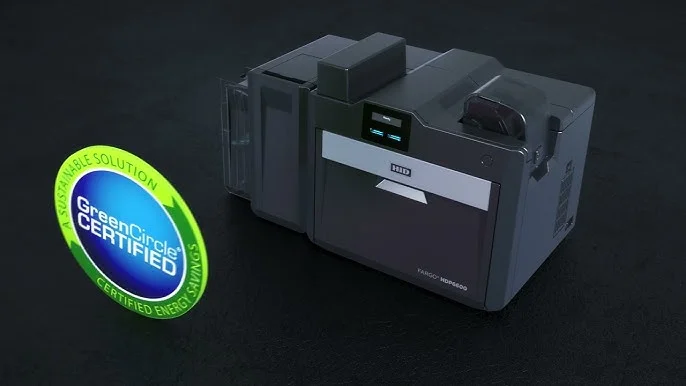
Why the HDP6600 is The Best 600 DPI Re-Transfer ID Card Printer
This article highlights the HDP6600 as the top re-transfer printer for efficient Zambia-based business operations with strong security and reliability features.

How to Choose the Right ID Card Printer for Your Organisation
A practical buyer's guide to choosing the right ID card printer for your Zambian organisation, from print volume and card technology to running costs.